
It is 3 AM in Baltimore. The wind is howling outside your window and the streetlights are reflecting off the snow. You are exhausted but your mind will not shut off. You stare at the ceiling and wonder why sleep feels impossible during the season when nature is supposed to be hibernating.
You might have heard of the Winter Blues or Seasonal Affective Disorder. You probably assume that is what you are dealing with. But here is the tricky part about winter sleep issues. They do not always look the same. While some people want to hibernate and sleep for twelve hours a day others find themselves wide awake and staring at the clock.
This is where we need to draw a line between Winter Insomnia and the Winter Blues. Understanding the difference is the first step to getting your rest back. At Unique Minds Behavioral Health Services we see this struggle every year across Maryland and Washington DC. We are here to help you untangle the symptoms and find a solution that works.
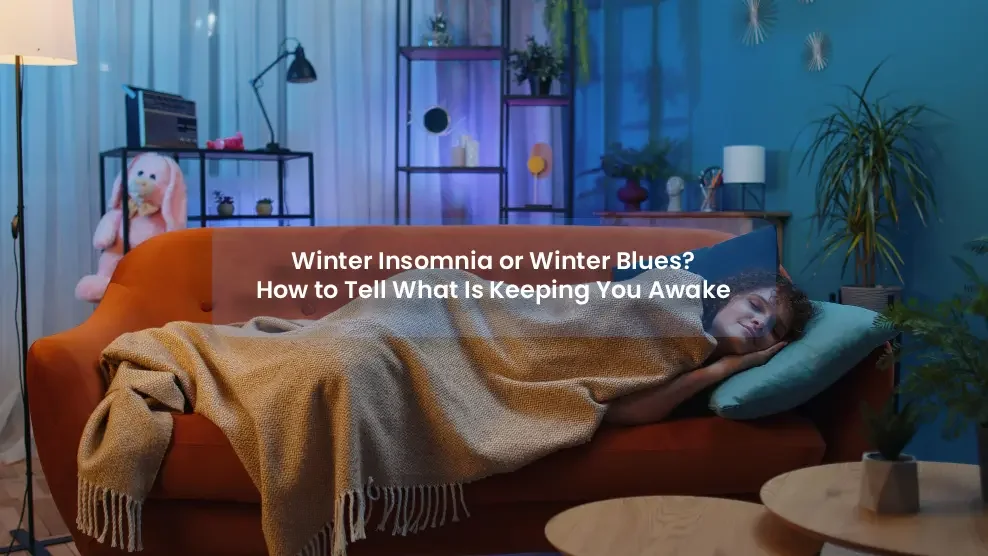
Cozy yet restless: Battling winter insomnia or the blues on a comfy sofa, wrapped in warmth amidst a calm, vibrant setting.
Why The Cold Season Disrupts Your Sleep
Our bodies are designed to sync with the sun. When the sun goes down our brain produces melatonin which is the hormone that signals it is time to sleep. In the summer this cycle is distinct and clear. The sun sets and we get tired.
Winter changes the rules. The days are shorter and we spend more time indoors under artificial lights. This confuses our circadian rhythm or our internal body clock. The National Institute of General Medical Sciences explains that these rhythms are physical and mental changes that follow a 24-hour cycle. When that cycle is disrupted by a lack of natural light your sleep suffers.
You might feel tired at 5 PM because it is dark outside but then get a second wind at 10 PM. This mismatch is a primary driver of winter sleep problems. It is not just "in your head" as it is a biological response to your environment.
The Winter Blues and Sleep
You may know the Winter Blues by its clinical name which is Seasonal Affective Disorder or SAD. This is a type of depression that comes and goes with the seasons. It typically starts in the late fall and early winter and goes away during the spring and summer.
According to the National Institute of Mental Health the symptoms of SAD can look very specific. For many people it does not cause insomnia. It actually causes hypersomnia which means sleeping too much. People with winter-pattern SAD often report having low energy and oversleeping. They might feel like they are moving through mud and craving carbohydrates.
If you are sleeping ten hours a night but still waking up exhausted you might be dealing with the Winter Blues rather than pure insomnia. The lack of sunlight affects your serotonin levels which regulates mood. When those levels drop you feel down and lethargic.
When It Is Actually Winter Insomnia
Winter Insomnia is different. This is not about sleeping too much. This is about the inability to fall asleep or stay asleep despite the cold weather inviting you to curl up in bed.
Several factors create this perfect storm for sleeplessness. First is the light exposure we mentioned earlier. Without bright morning light your body does not get the "wake up" signal it needs to start the timer for sleep later that night.
Second is the environment. We crank up the heat in our homes to combat the Maryland chill. This dries out the air and can make you overheat at night. Your body needs to drop its core temperature to initiate sleep. If your bedroom is a sauna you will toss and turn.
Third is lifestyle. We tend to move less in the winter. Physical activity builds up what we call "sleep pressure" or the body's need for rest. If you are sedentary all day because it is freezing in Silver Spring or Bethesda your body might simply not be tired enough to sleep through the night.
How to Spot the Difference
You need to look at your energy patterns to tell these two apart.
Ask yourself how you feel when you wake up. If you struggle to drag yourself out of bed after nine hours of sleep that points toward the Winter Blues. If you wake up exhausted because you stared at the clock for three hours that points toward Winter Insomnia.
Look at your appetite. The Winter Blues often come with a craving for heavy comfort foods and weight gain. Winter Insomnia might come with anxiety and a lack of appetite or stress eating late at night out of frustration.
Check your mood in the evening. Are you lethargic and zoning out on the couch? Or are you "tired but wired" with racing thoughts? That agitated energy is a classic sign of insomnia.
Practical Steps to Reclaim Your Rest
You do not have to suffer until spring. There are clinical strategies we use at Unique Minds Behavioral Health Services to help our clients regulate their sleep.
Prioritize Morning Light This is the single most effective tool for fixing your circadian rhythm. Try to get outside for twenty minutes within the first hour of waking up. Even on a cloudy day in Annapolis the natural light is stronger than your indoor bulbs. This anchors your body clock.
Watch the Thermostat Keep your bedroom cool. The ideal temperature for sleep is often lower than you think. Aim for around 65 to 68 degrees Fahrenheit. Use blankets for warmth so you can adjust during the night if you get too hot.
Move Your Body You do not need to run a marathon in the snow. Simple indoor exercises or a brisk walk in the afternoon can make a difference. The goal is to be physically active enough to earn your sleep.
Manage Your Vitamin D The sun is our main source of Vitamin D. In the winter we often become deficient. Some research suggests a link between low Vitamin D and sleep issues. Talk to your primary care doctor about checking your levels.
We Are Here to Support You
Sometimes lifestyle changes are not enough. If your sleep problems are affecting your job or your relationships or your ability to function safely it is time to seek professional help. Sleep is not a luxury. It is a pillar of mental health.
Unique Minds Behavioral Health Services offers comprehensive care for both insomnia and mood disorders like SAD. We understand the specific challenges of living in this region. Whether you are in Baltimore City or Howard County or Prince George's County we have a location or a virtual option for you.
We provide both In-person visits and Telehealth appointments to fit your schedule. You can visit our Maryland office on Park Heights Avenue in Baltimore or our DC office on North Capital Street. We also serve specialized areas including Montgomery County and Anne Arundel County and Charles County.
You do not have to navigate this winter alone. Sleep is vital and we are dedicated to helping you get the rest you deserve.
Ready to Sleep Better?
If you are tired of counting hours instead of sheep let us help you find the root cause. Contact Unique Minds Behavioral Health Services today.
You can reach us by Booking page here.
Our working hours are Monday through Friday from 9 am to 5:30 pm. We are also available on Saturdays by appointment only. Let’s get your sleep back on track before the snow melts.