
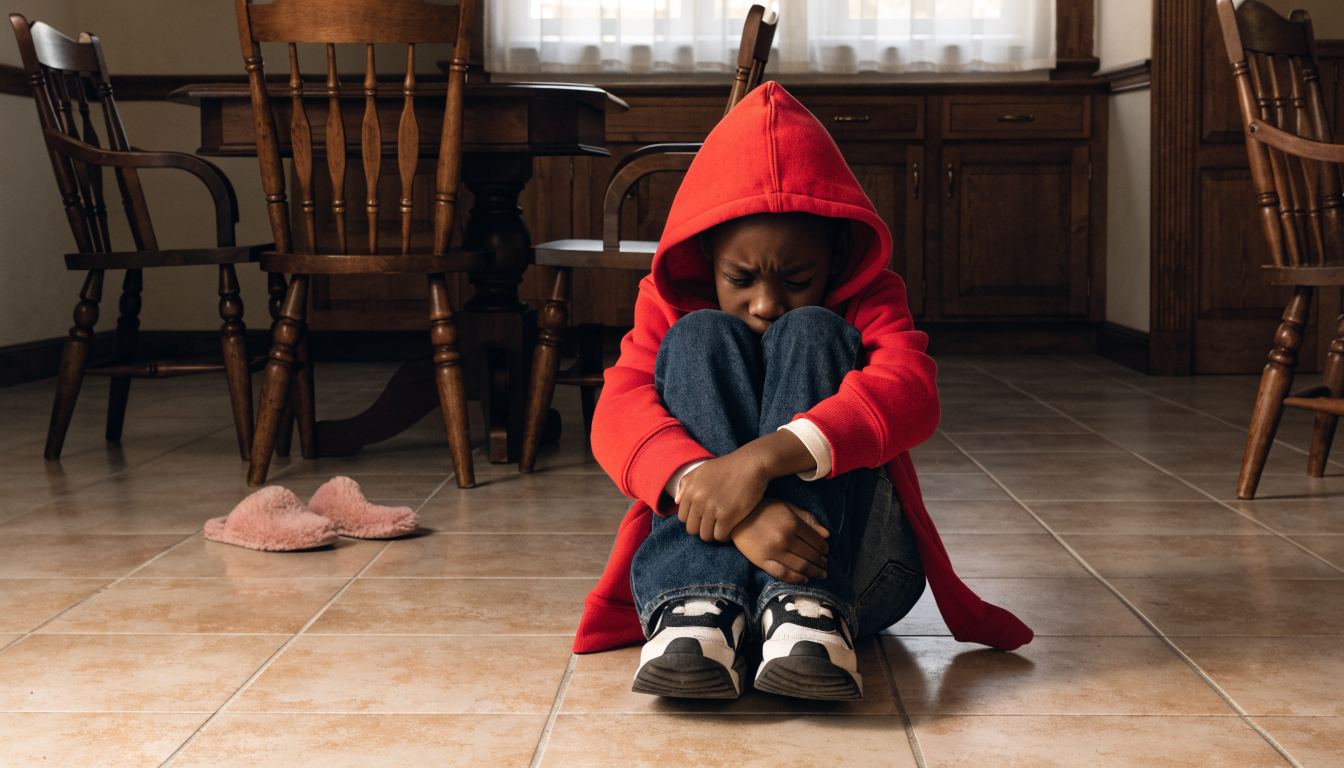
Children rarely announce that they feel overwhelmed by the demands of the classroom. Instead, anxiety in young people shows up as stomachaches at bedtime, emotional meltdowns over misplaced pencils, or slow morning routines that delay getting in the car.
Data from the Centers for Disease Control and Prevention (CDC) shows that roughly 9.4% of children aged 3 to 17—about 5.8 million young people—have a diagnosed anxiety disorder. School avoidance does not happen out of nowhere. It begins weeks or months earlier through subtle behavioral changes and somatic complaints that parents often misread as simple defiance or mild physical illness.
How Childhood Anxiety Hides Behind Physical Complaints
The brain and gut communicate constantly through the autonomic nervous system. When a child senses emotional threat or social pressure, their body initiates a fight-or-flight response, dumping cortisol and adrenaline into the bloodstream. This surge diverts blood away from digestive organs and into major muscle groups.
As a result, an anxious child does not fake illness to skip class. They genuinely feel nausea, dizziness, tight chest sensations, and sharp abdominal cramps. Research tracked by the National Institute of Mental Health (NIMH) emphasizes that physical symptoms are among the most common ways anxiety presents in youth. You might notice these issues peak on Sunday evenings or early Monday mornings, only to disappear completely on Saturday afternoons.
Children lack the emotional vocabulary to say, "The sensory overload in the cafeteria makes my heart race." They say, "My head hurts." If your family doctor finds no underlying medical cause for recurring gastrointestinal issues or tension headaches, review our guide on when physical symptoms are actually anxiety to understand how the body carries hidden stress.
Behavioral Clues: Perfectionism, Defiance, and Control
Anxiety rarely looks like a quiet child shivering in the corner. In many households, it masquerades as rigid control or sudden outbursts of anger.
Subtle Signs vs. Late-Stage Avoidance

Early Warning Signs:
- Erasing homework until paper tears
- Repeatedly asking "What if?" about schedules
- Meltdowns over small routine changes
- Long delays getting dressed in the morning

Late-Stage Warning Signs:
- Refusing to leave the car at drop-off
- Daily visits to the school nurse
- Panic attacks at the school front door
- Complete morning refusal to get out of bed
The Perfectionism Trap
Anxious children frequently hold themselves to rigid, unrealistic standards. A child may spend two hours on a ten-minute coloring assignment, erasing lines until the paper rips. They dread making mistakes, receiving critical feedback, or disappointing their teacher. This behavior looks like strong study habits at first glance. Under the surface, it is a desperate attempt to neutralize catastrophic fear about being judged.
Irritability and Meltdowns
When a nervous system stays on high alert, emotional bandwidth collapses. A minor frustration—such as an unexpected pop quiz, a broken shoelace, or a sibling sitting in their chosen chair—triggers an explosive tantrum. Parents often discipline the outburst as bad behavior without realizing the child’s stress tolerance is completely depleted. If your child has shifted from cooperative to combative, our resource on recognizing depression and mood shifts in children covers how emotional distress disguises itself as hostility.
The Cycle That Leads to School Refusal
School avoidance functions as a self-reinforcing behavioral loop. Psychologists define this through the mechanism of negative reinforcement.
Anxiety Trigger (Classroom/Social Stress)
         │
         ▼
Acute Distress (Stomachache, Panic, Meltdown)
         │
         ▼
Parent Allows Child to Stay Home
         │
         ▼
Immediate Relief (Distress drops to zero)
         │
         ▼
Brain Learns: "Home is safe. School is dangerous."
         │
         ▼
Heightened Anxiety on the Next School Day
When an overwhelmed child stays home, their physiological distress drops to zero within minutes. The brain registers that avoidance brings safety. The next morning, facing the classroom feels twice as intimidating because the child did not build the distress tolerance needed to realize they could survive the morning bell.
Allowing occasional mental health days feels compassionate, but recurring absences tell the brain that school is fundamentally unsafe. The goal is never to force a terrified child into school with harsh punishment. The goal is to catch the early hesitation before staying home becomes an established coping habit.
Clinical Tools to Address School-Related Anxiety
Effective intervention begins with structured clinical screening. Providers do not rely on guesswork; they use standardized, validated tools like the Screen for Child Anxiety Related Disorders (SCARED), a 41-item inventory that measures generalized anxiety, separation anxiety, and social phobia in children ages 8 to 18.
At Unique Minds Behavioral Health Services, our clinical team works closely with families to evaluate the root cause of school-related distress:
- Dr. Victorine (Vicky) Ngang, DNP, PMHNP-BC, MSN, RN
- Dr. Ophilia Mbah, DNP, PMHNP-BC, MSc (CHM), MSN, RN
- Dr. Barbara Clement Njoku, DNP, PMHNP-BC, MSN, APRN
Therapy typically focuses on Cognitive Behavioral Therapy (CBT) and graded exposure. In CBT, children learn to identify "worry thoughts" and match them against reality. Exposure exercises take small, deliberate steps toward the school building without triggering an unmanageable crisis.
When symptoms prevent a child from sleeping, eating, or participating in basic therapy exercises, a comprehensive psychiatric evaluation helps determine whether targeted medical care can stabilize their nervous system. In moderate to severe pediatric cases, clinicians may discuss evidence-based medication management. Selective Serotonin Reuptake Inhibitors (SSRIs) approved by the U.S. Food and Drug Administration (FDA) have a long track record of helping children regain their emotional footing alongside therapy.
Practical Steps Parents Can Take This Week
If morning departures have turned into high-stress battles, do not wait for the school principal to call about truancy. Take structured, predictable steps to change the morning dynamic.
First, keep a symptom log for seven days. Track what time physical complaints occur, what the child ate, and what assignments or social dynamics were scheduled for that day. Bring this record to your pediatrician to rule out organic medical issues while showing the pattern of anxiety-related symptoms.
Second, remove the entertainment value of staying home. If your child cannot attend school due to illness, create a quiet, low-stimulation environment:
- Turn off gaming consoles, televisions, and tablets during standard school hours.
- Keep the child in bed resting or reading textbooks rather than playing.
- Require regular schoolwork to be completed at the kitchen table if physical symptoms clear by lunchtime.
Make staying home about resting and recovering, not screen time and relaxation.
Third, establish clinical support early. Unique Minds Behavioral Health Services provides evaluations and personalized treatment plans both in person and through secure virtual visits. We serve families across all of Maryland—including Montgomery County, Prince George's County, Baltimore City, Baltimore County, Anne Arundel County, Howard County, Frederick County, Carroll County, Harford County, Charles County, Cecil County, Silver Spring, Laurel City, California, MD, Salisbury, Hagerstown, Bowie, Annapolis, and College Park—as well as Washington, DC, Delaware, and Ohio.
Choosing between clinic visits and home-based sessions depends on your child's age, attention span, and comfort level. Our breakdown on choosing telehealth or in-person therapy will help you pick the best environment for your child's initial evaluation.
Early action keeps a temporary challenge from turning into a long-term academic and emotional disruption. Talk to your child with curiosity rather than frustration, document the patterns you see, and bring a qualified pediatric mental health provider into the conversation before school refusal takes root.